
5 Ways Artificial Intelligence Can Streamline Your Interior Design Process
Artificial Intelligence (AI) is transforming the way interior designers work, enabling them to save time, improve efficiency, and deliver more innovative designs. At IDF (Interior Designing Firm), we use AI-driven tools to help designers, architects, and homeowners create stunning spaces faster and smarter. From layout planning to realistic 3D visualizations, AI is streamlining every step of the design process.
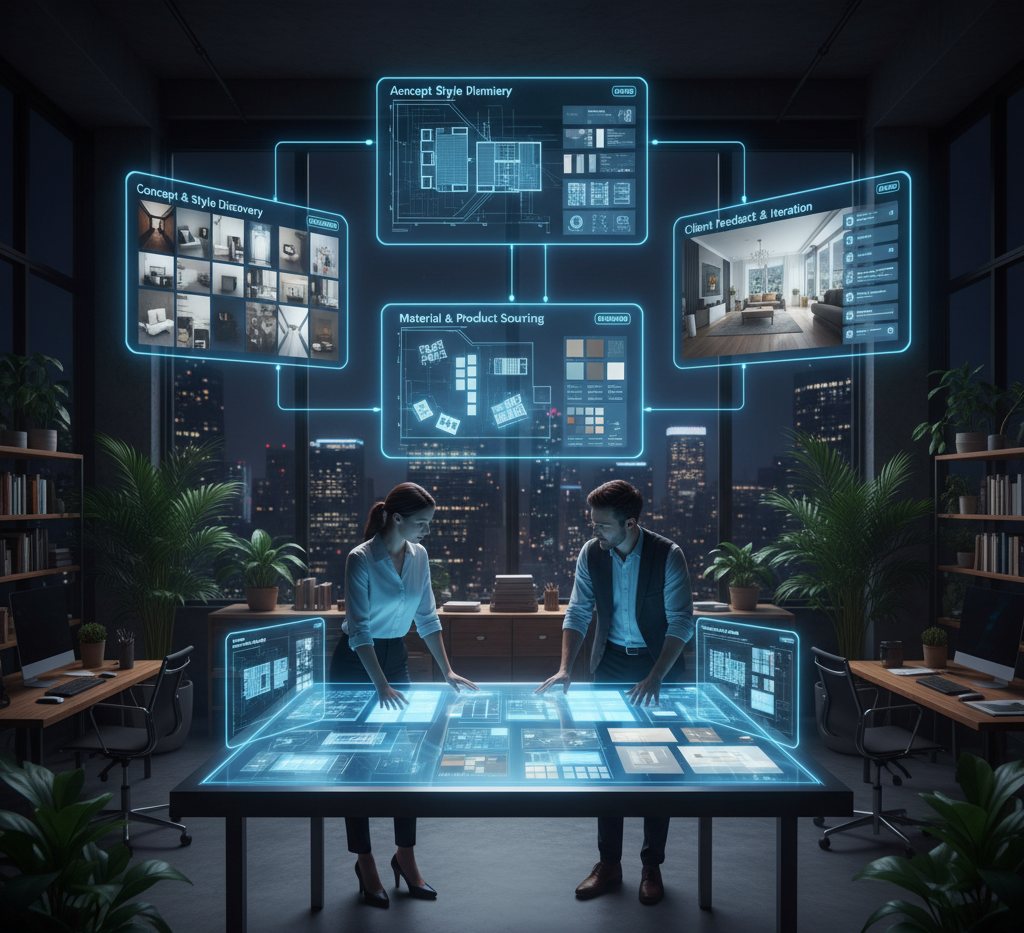
One of the biggest time-consuming tasks in interior design is planning layouts. AI tools can quickly analyze room dimensions, furniture sizes, and functional requirements to propose multiple layout options. Designers can instantly see the best arrangement for maximizing space and improving flow. This not only saves hours of manual work but also helps designers present more options to clients in less time.
Creating cohesive design concepts manually can be challenging. AI simplifies the process by automatically generating moodboards, color palettes, and style suggestions based on user preferences. Designers can explore multiple concepts and refine them according to client feedback. This automation enhances creativity while ensuring that every design element aligns with the overall vision.
Traditionally, creating photorealistic 3D renders takes hours or even days. AI accelerates this process by instantly converting floor plans or sketches into highly detailed 3D models with accurate lighting, shadows, and textures. This helps clients visualize the final design more clearly, reduces revisions, and shortens the project timeline significantly.
Selecting the right materials, furniture, and decor items is another area where AI shines. AI can analyze the style, budget, and functional needs of a project to recommend suitable products. This ensures consistency across the design, introduces new options, and minimizes the time designers spend researching materials and furnishings, allowing them to focus more on creativity.
AI-powered tools also improve team collaboration and workflow management. Designers can share updates with clients, contractors, and colleagues in real-time. Automated project tracking, task assignments, and document management reduce errors and communication gaps. By streamlining coordination, designers can spend more time focusing on innovative solutions and client satisfaction.
Time Efficiency:
AI automates repetitive tasks like layout planning and 3D rendering, allowing designers to complete projects faster.Enhanced Creativity:
With AI handling mundane tasks, designers can focus on innovation and creating unique spaces.Cost Reduction:
AI helps identify cost-effective materials, optimize layouts, and reduce errors, lowering project expenses.Better Client Experience:
Interactive AI-generated visuals and faster delivery improve client satisfaction and trust.Improved Accuracy:
AI ensures precise measurements, proper furniture placement, and accurate lighting simulations for flawless results.
Artificial Intelligence is revolutionizing interior design, helping designers deliver stunning, client-ready projects efficiently. At IDF, AI tools enable faster space planning, automated concept creation, realistic 3D rendering, intelligent product recommendations, and smooth collaboration. By embracing AI, designers can save time, reduce costs, improve accuracy, and elevate creativity, resulting in exceptional spaces that exceed client expectations.
Ready to transform your interior design workflow? Explore IDF’s AI-powered tools and start designing smarter, faster, and better today.
All rights reserved © Interior Designing Firm